
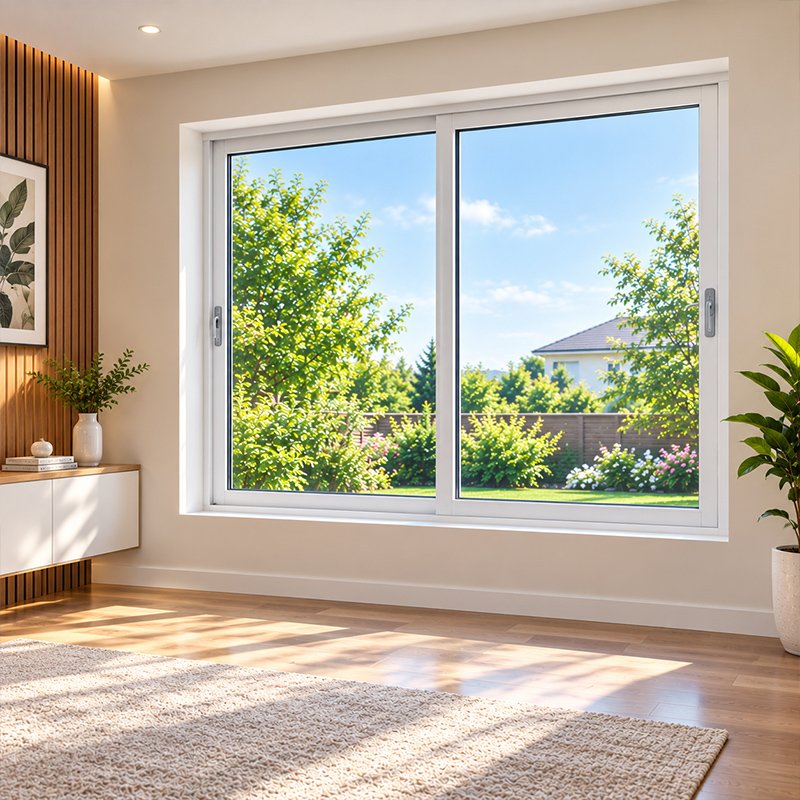
The two most common uPVC window types solve different problems. Pick per opening and you save money and get better windows.
They Solve Different Problems
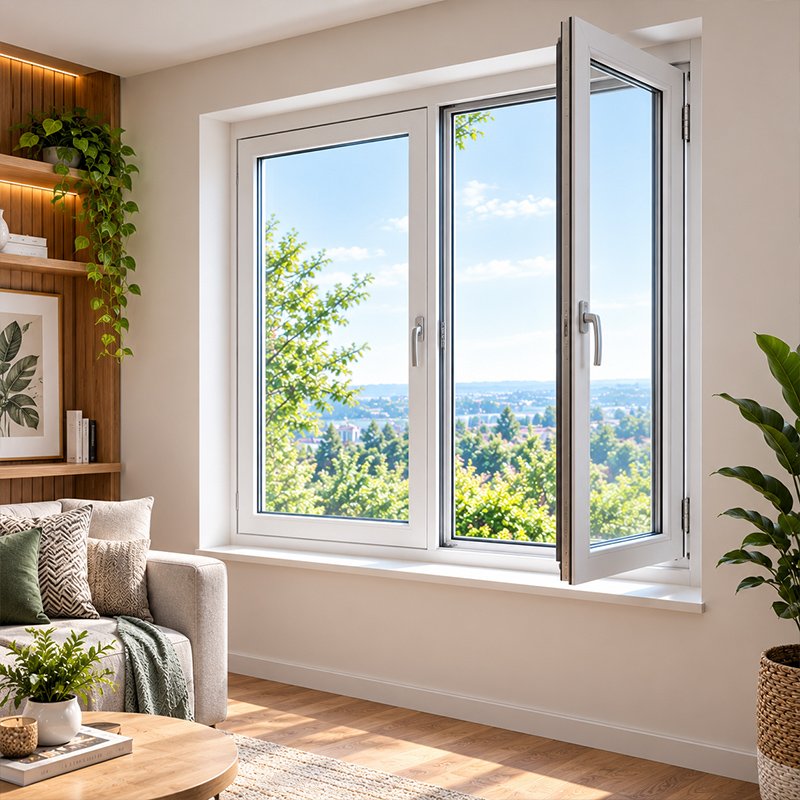
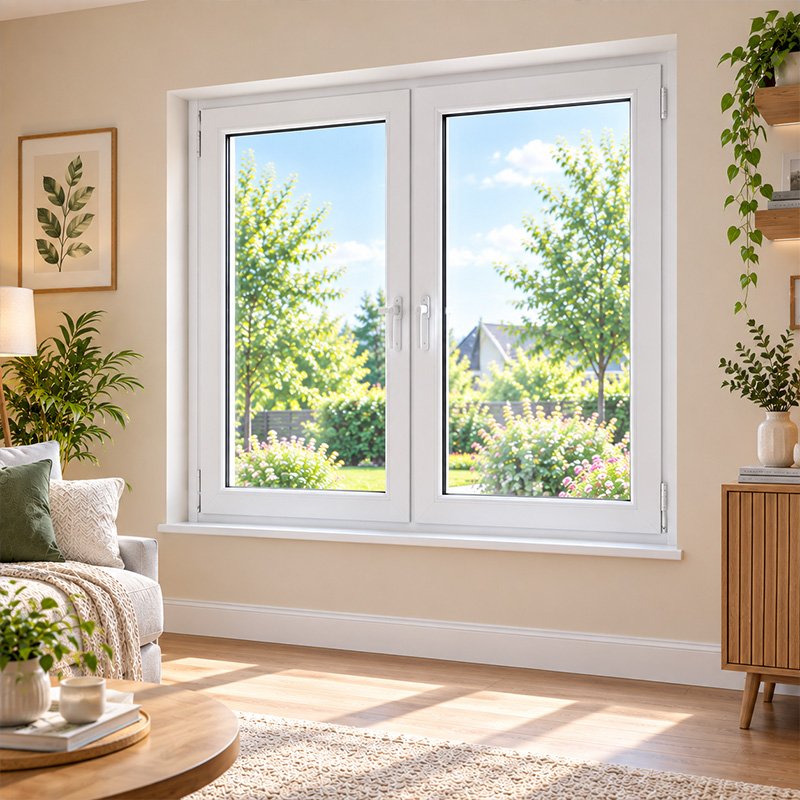
A casement swings outward on side hinges; a slider runs along a track inside the frame. Everything else follows from that one difference, and it is why the right answer changes from opening to opening within the same house.
Choose per opening rather than per house and you get better windows for less money — which is the opposite of how most orders are placed.
Where the Casement Wins
Sealing, noise and ventilation. The sash presses onto the gasket on all four sides, so there is no running gap for weather or sound to travel through. The whole opening clears when it swings, and there is no central track post interrupting the view.
That makes casements the right answer for bedrooms, living rooms, road-facing rooms and anywhere the view matters. They also take the heaviest double-glazed units.
Where the Slider Wins
Anywhere a projecting sash would foul something — a passage, a narrow balcony, a grille, a neighbour's wall. That describes most apartment openings, which is why sliders outsell everything else we make.
Sliders are also cheaper for the same area, and a 3-track carries mosquito mesh on its own rail, which for many households settles the argument on its own.
A Typical House, Marked Up Honestly
Balcony and passage openings: 3-track sliders with mesh. Road-facing bedrooms: casements, double glazed. Internal bedrooms: casements with 5mm plain glass. Above the kitchen counter: an awning. Bathrooms: hoppers with obscured glass. Stairwell: a fixed pane.
That mix costs less than a house of premium casements and performs better than a house of budget sliders. It is what we mark on the plan at almost every site visit.
The Question to Ask Yourself per Opening
Can a sash swing outward here without hitting anything, and does this room need to seal well? If yes to both, casement. If no to the first, slider. If the room needs no ventilation at all, fixed.
Everything else — glass, locking, finish — is a second-order decision once the type is right.
Want this applied to your own openings? We measure free anywhere in Perambalur, Trichy, Cuddalore and Kallakurichi, and mark a recommended type and glass on every opening before quoting.
Book a Free Site VisitMore uPVC Guides
Questions From This Guide
The follow-up questions readers send us most often after this one.
Call +91 70947 02370Which is better, uPVC casement or sliding windows?
Casements seal, insulate and ventilate better; sliders need no swing space and cost less. Choose per opening: casements for bedrooms and views, sliders for balconies, passages and apartments.
Are sliding windows cheaper than casement windows?
Yes, for the same area, mainly because the hardware is simpler — rollers and a touch lock instead of hinges, stays and multi-point gearing.
Can I put mosquito mesh on a casement window?
Yes, as a separate frame on the inside face. On a slider the mesh runs on its own track, which is why 3-track sliders are so popular.
Which type is better for a first-floor bedroom?
A casement or, better, a tilt and turn — because you can clean the outside face of the glass from inside the room, which a slider does not allow.
Tell Us About Your Openings
Send the room count or the number of openings and we will call back with an indicative per-square-foot rate, then book a free site measurement.
Get This Applied to Your Own House
A free site visit turns general advice into a marked-up plan and a written per-square-foot quote.