
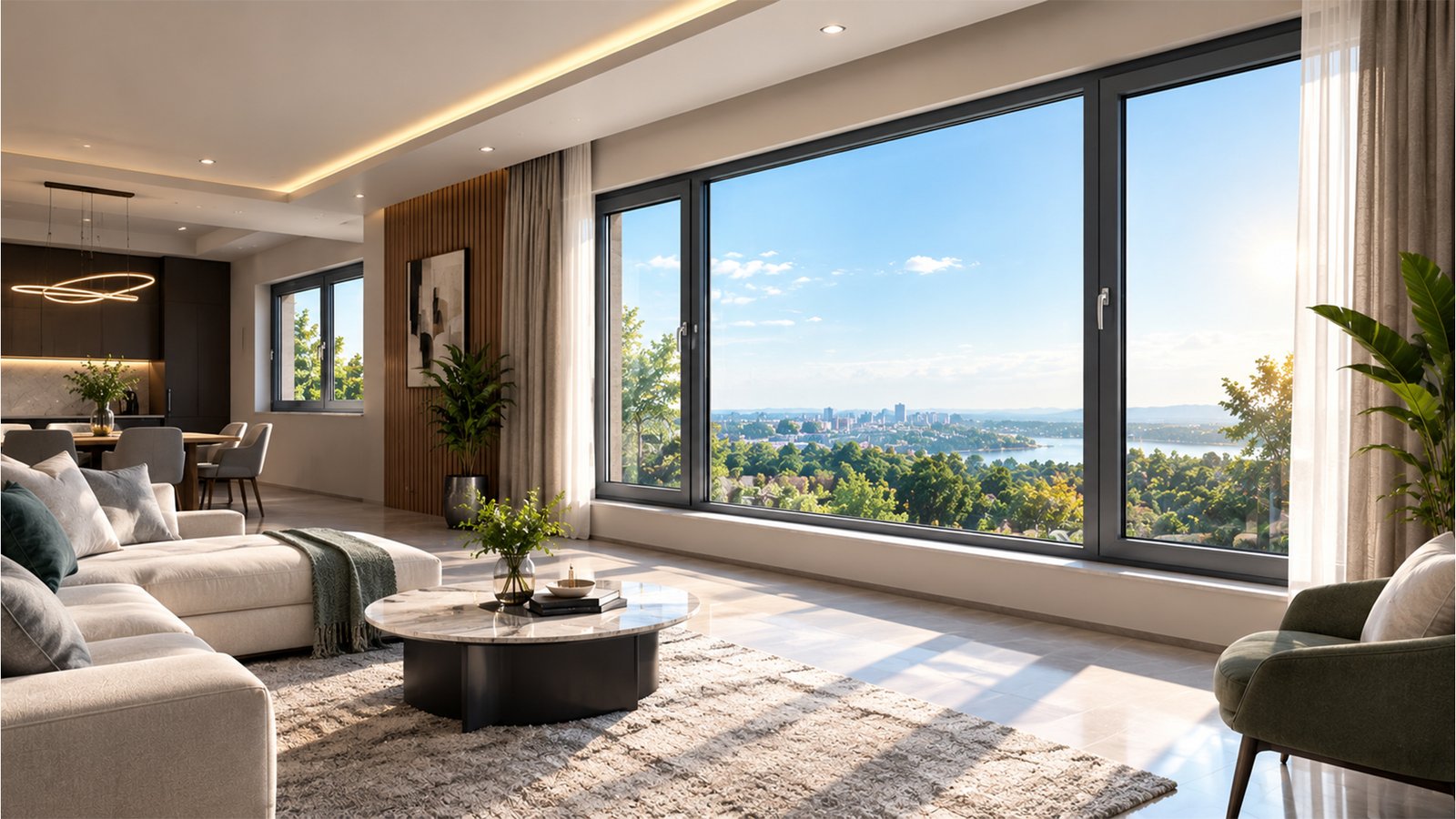
Double glazing is oversold as a whole-house upgrade and undersold where it matters. Which rooms genuinely justify it.
Noise Gets In Two Ways
Through the glass, and through the gaps around the sash. Most people only think about the first, which is why so many double-glazed windows disappoint — a sealed unit in a badly sealing frame is money half wasted.
A soundproof uPVC window handles both: two panes with a sealed air gap to break the path through the glass, and a multi-point-locked sash compressing onto EPDM gaskets to close the path around it.
What "Up to 50% Less Noise" Means in a Room
Compared with a single-glazed aluminium slider, a double-glazed uPVC casement or tilt and turn cuts perceived noise roughly in half. In practice customers describe it as the traffic sounding like it is a street away rather than outside the window.
It does not make a room silent. Nothing short of a sealed box does. What it does is take a bedroom from unusable at 6am to sleepable.
Which Rooms Justify It
Bedrooms and study rooms facing a main road, a junction, a bus stand or a market. Rooms where you work from home. Hotel and clinic rooms. Air-conditioned rooms, where the same sealing that stops noise also stops your cool air leaving.
Internal courtyards, kitchens, bathrooms and rooms facing a quiet compound do not justify it. Specifying room by room instead of house-wide is what keeps the order affordable.
The Window Type Matters as Much as the Glass
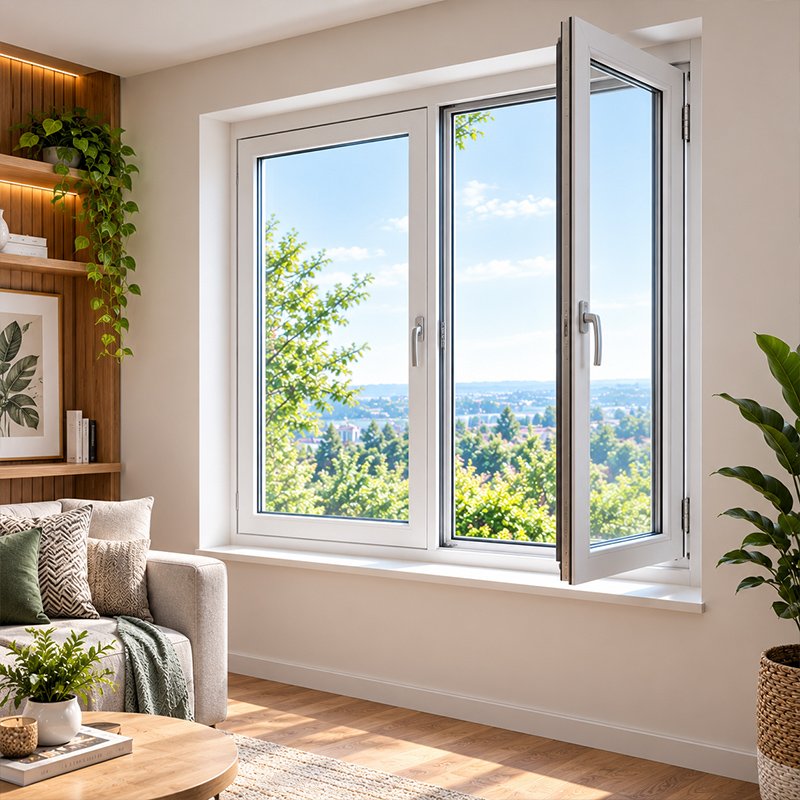
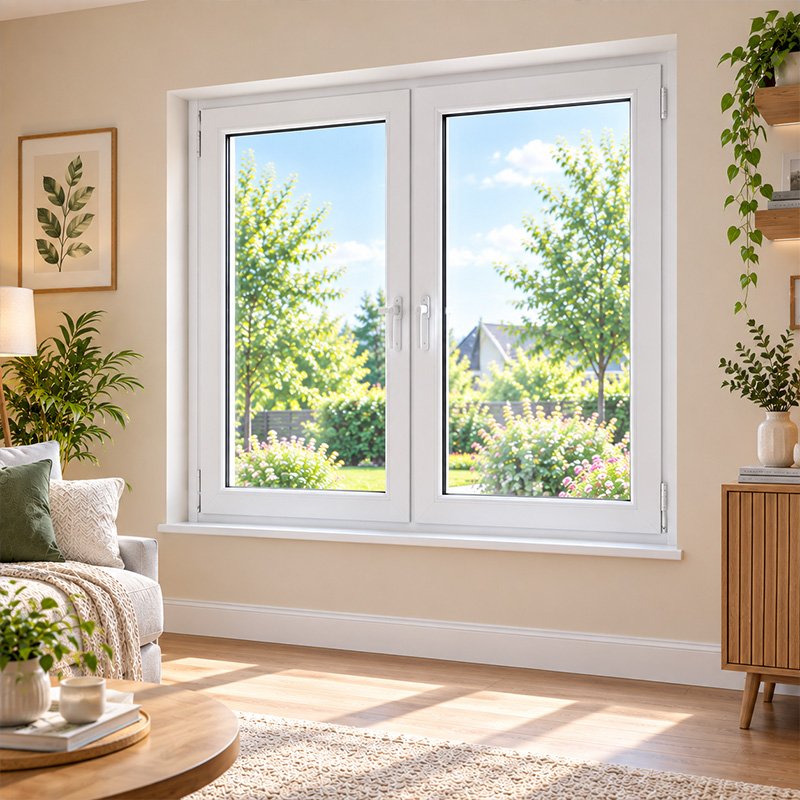
A tilt and turn seals best because its continuous gearing compresses the gasket evenly all round. A casement is close behind. A fixed pane is better still where the room does not need to open.
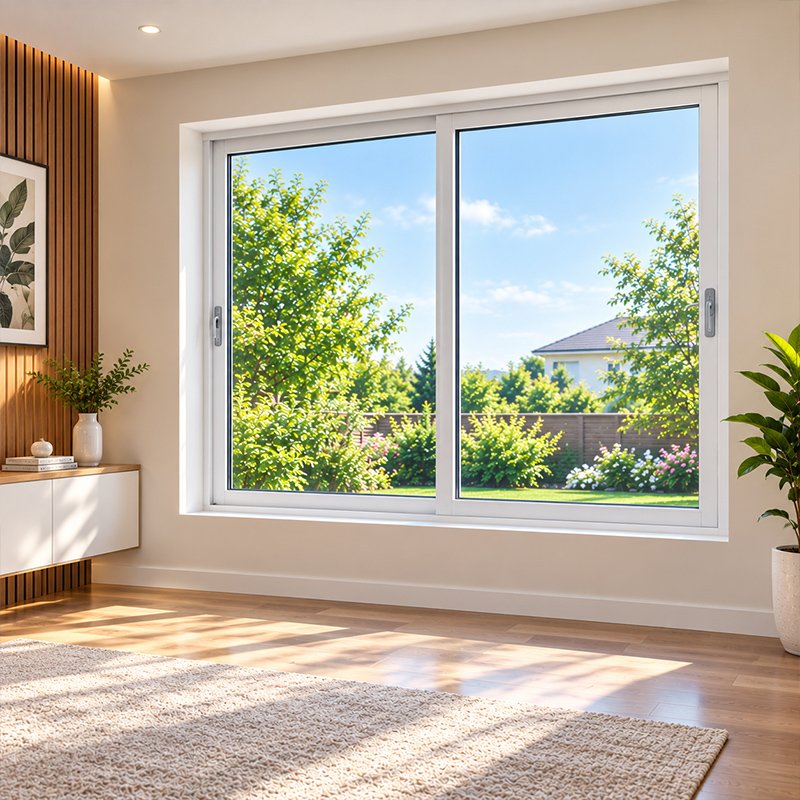
A sliding window will always seal least well, because a track needs a running gap to slide in. If a road-facing bedroom currently has a slider, changing the type matters more than adding glass thickness.
What It Costs and What Else You Get
A double-glazed casement runs meaningfully above a plain single-glazed one — the sealed unit, the deeper sash and the multi-point gearing all add cost. Restricting it to the two or three rooms that need it keeps the whole-house figure sensible.
The same specification also cuts dust and heat gain, which in Tamil Nadu is close to a second benefit for free.
Want this applied to your own openings? We measure free anywhere in Perambalur, Trichy, Cuddalore and Kallakurichi, and mark a recommended type and glass on every opening before quoting.
Book a Free Site VisitMore uPVC Guides
Questions From This Guide
The follow-up questions readers send us most often after this one.
Call +91 70947 02370Do soundproof uPVC windows really work?
Yes — up to about 50% less perceived noise than a single-glazed aluminium window, provided the frame seals properly. The glass alone is only half the job; the gasket compression around the sash is the other half.
Is triple glazing worth it in India?
Rarely. The jump from single to double glazing delivers most of the benefit; triple adds weight, cost and heat-trapping without a proportionate acoustic gain in this climate.
Can I make my existing windows soundproof?
Not meaningfully. If the frame is an old aluminium slider, the gaps around the sash dominate, so replacing the window is the only real fix. We quote room by room so you can start with the worst one.
Which glass combination do you recommend?
5+12+5 covers most rooms. For heavy exposure — a junction or a bus stand — we specify 6+16+6 or add a laminated acoustic pane on the outer leaf.
Tell Us About Your Openings
Send the room count or the number of openings and we will call back with an indicative per-square-foot rate, then book a free site measurement.
Get This Applied to Your Own House
A free site visit turns general advice into a marked-up plan and a written per-square-foot quote.