
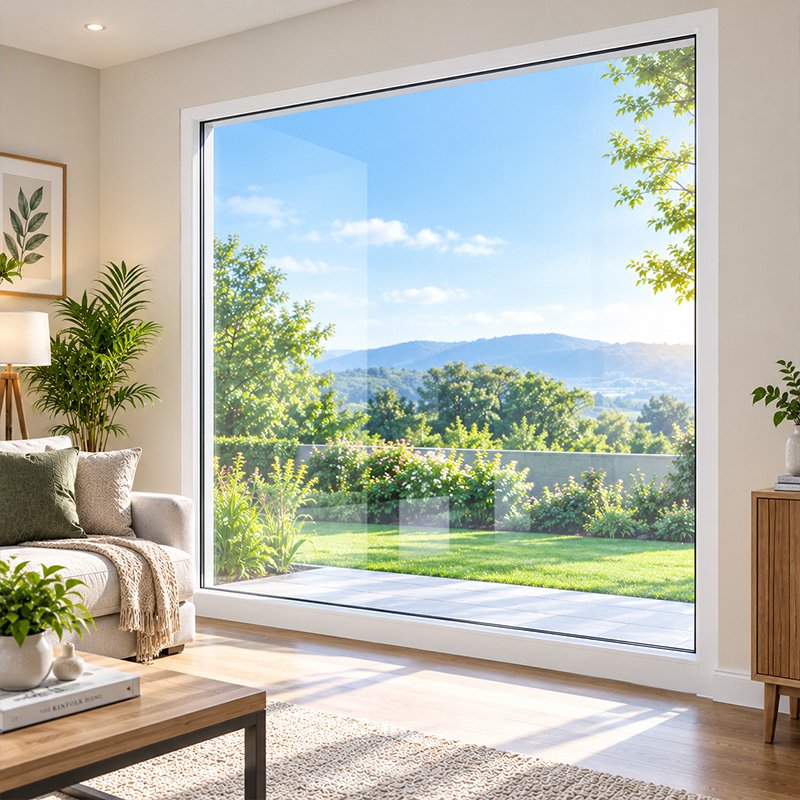
Eight glass types, one honest recommendation for each room in a typical Tamil Nadu house.
The Frame Seals; The Glass Performs
Once the frame and opening type are right, every remaining question — noise, heat, privacy, safety — is a glass question. It is also where quotes differ most, and where the most money gets wasted.
Here is what we actually specify, room by room, in a typical Tamil Nadu house.
Bedrooms
A road-facing bedroom gets a 5+12+5 insulated double-glazed unit in a casement or tilt and turn. That is the single most worthwhile glass upgrade in most houses.
An internal bedroom facing a compound or courtyard gets 5mm plain float. If the wall faces west, 6mm tinted cuts the afternoon heat for very little extra.
Living and Dining Rooms
6mm toughened for large panes and anything at door height, because these are the rooms where children and furniture meet glass. If the room is air conditioned, an insulated unit pays for itself in comfort as much as in power.
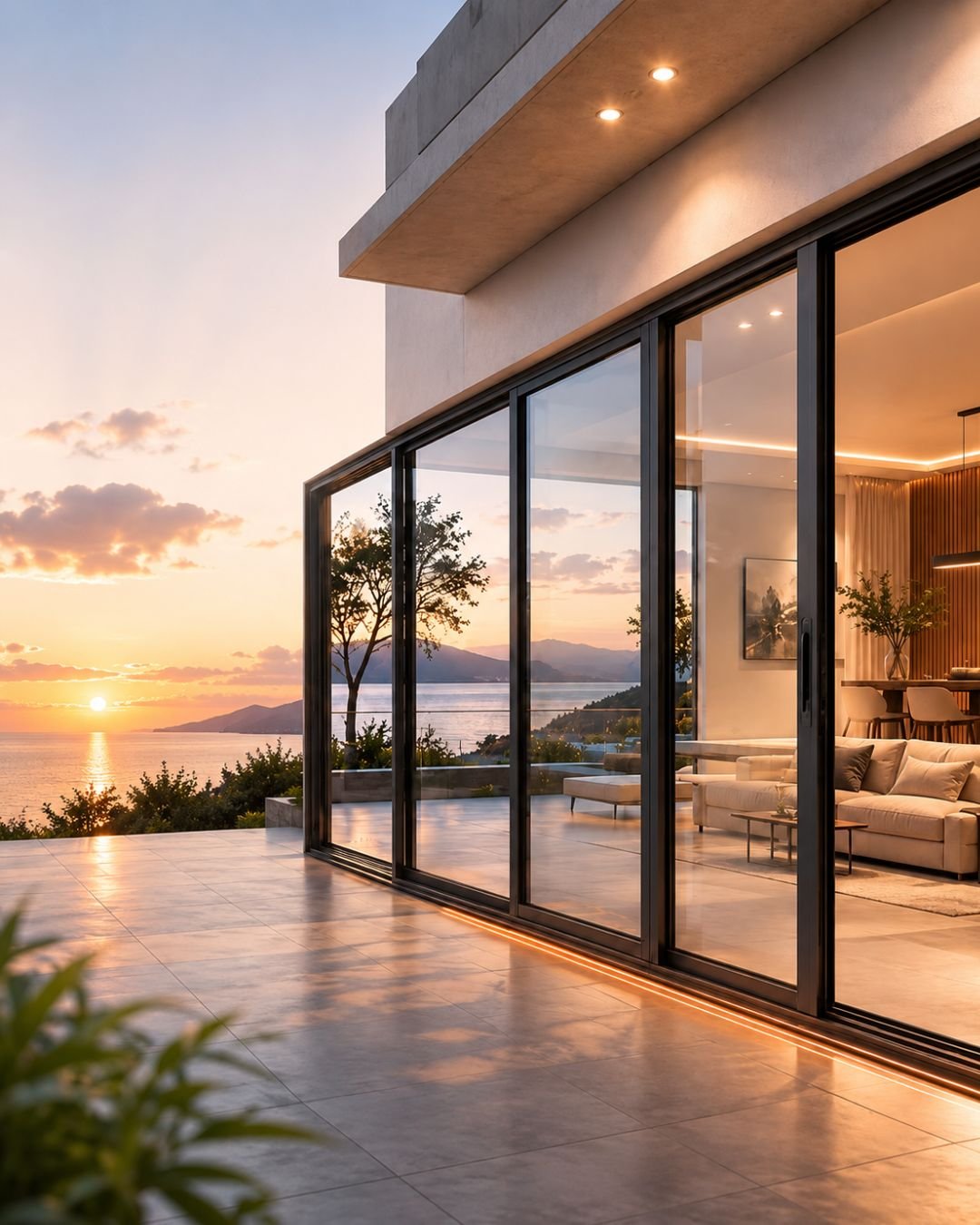
Where a big pane frames a garden, keep the glass clear — tint and reflective coatings both dull the view you paid for.
Kitchens, Bathrooms and Utility
Kitchens: 5mm float, toughened above a counter or hob. Bathrooms and WCs: 5mm obscured or reeded — it passes daylight, blocks sight and costs barely more than plain.
Utility and service areas: plain float is fine. This is where whole-house double glazing quietly wastes thousands of rupees.
Stairwells, Gables and West Walls
6mm toughened in fixed panes for stairwells and double-height halls, since nobody can reach them to clean or to close them in a storm.
On a west-facing wall taking full afternoon sun, a tinted or reflective outer pane makes a measurable difference to room temperature, and in a double-glazed unit the two effects compound.
Safety and Security
Toughened glass is standard on all our doors and low-level glazing: four to five times stronger than float, and it breaks into blunt granules instead of shards.
Laminated glass is the step beyond — two panes bonded to a PVB interlayer that holds together when broken. It is the right answer for isolated sites, ground-floor street frontage and anywhere acoustic performance matters as much as security.
Want this applied to your own openings? We measure free anywhere in Perambalur, Trichy, Cuddalore and Kallakurichi, and mark a recommended type and glass on every opening before quoting.
Book a Free Site VisitMore uPVC Guides
Questions From This Guide
The follow-up questions readers send us most often after this one.
Call +91 70947 02370Which glass is best for uPVC windows?
There is no single answer — it is a per-room decision. Insulated double glazing for road-facing bedrooms, toughened for doors and large panes, obscured for bathrooms, plain float everywhere it makes no difference.
What is the difference between toughened and laminated glass?
Toughened is heat-treated for strength and breaks into blunt granules. Laminated is two panes bonded to an interlayer, so it holds together when broken and also damps sound. Laminated costs more and is the security and acoustic choice.
Is tinted glass a good idea in Tamil Nadu?
On west and south-west walls, yes — it cuts afternoon solar gain noticeably. On a window framing a view, no; it dulls exactly what you wanted to see.
Can I mix glass types across one house?
You should. Every quote we write specifies glass opening by opening, which is what keeps the total sensible while still putting the good glass where it earns its money.
Tell Us About Your Openings
Send the room count or the number of openings and we will call back with an indicative per-square-foot rate, then book a free site measurement.
Get This Applied to Your Own House
A free site visit turns general advice into a marked-up plan and a written per-square-foot quote.